
The Story Behind the Stories: Why a Physician Started Writing Children's Books About Money and Mindset
At first glance, medicine and children's literature might seem like two completely different worlds.
But for me, they share something fundamental - both are about helping people.
We know that knowledge alone doesn't always change behavior. People need the right tools, the right language, and often, the right moment to make a change. And children are no different.
The habits, beliefs, and attitudes they develop early can become the foundation they carry into adulthood. If we can help children learn healthy ways to think about money, mistakes, challenges, and growth while they're young, perhaps we can give them something just as valuable as a lesson: a strong foundation for the future.
That realization became part of what inspired me to bring these lessons to life through children's stories.
From an Idea to a Story
Behind every book is a creative process that most readers never get to see.
There is the initial idea, the moment when a concept begins to take shape. Then come the questions.
Who is this story for?
What does this child need to learn?
How can the lesson be made simple without making it simplistic?
What would make a child want to keep reading?
And perhaps the most important question, how can this story create a conversation between a child and the adult reading it with them?
These questions guide the writing.
The characters have to feel real enough for children to recognize themselves in them. The challenges have to be relatable. The language has to be accessible. And the lesson has to be woven into the story rather than placed on top of it.
That takes time. There are drafts that don't quite work. Ideas that sound better in your head than they do on the page. Pages that need to be rewritten. Scenes that have to be simplified.
And moments when the author has to step back and ask,"Is this really something a child would understand… and enjoy?”
That process is part of the behind-the-scenes story. The finished book may look effortless.
Building a Growth Mindset, One Story at a Time
One of the ideas woven throughout these books is the concept of growth mindset.
At its heart is a simple but powerful idea: abilities aren't necessarily fixed. We can learn, practice, improve, and develop.
For children, that can change the way they interpret difficulty.
Instead of: “I'm not good at this.”
The thought can become: “I'm not good at this yet.”
That one word “yet” creates room for possibility. And possibility is powerful.
Children will inevitably encounter things they can't do immediately. They'll get answers wrong. They'll lose games. They'll struggle to understand something. They'll make choices they wish they could redo.
The goal isn't to protect them from every mistake. It's to help them understand what mistakes can mean. A mistake can be information. A challenge can be an opportunity to practice. Not knowing something can be the beginning of learning it.
These aren't lessons that only matter in childhood. They are skills that can follow someone into school, relationships, careers, entrepreneurship, and adulthood.
And Then There's Money
Money can be an especially difficult subject for families. There is a lot of emotion associated with money. For many, this includes stress, fear and trauma.
Parents may want their children to become financially responsible, but many aren't sure how early to begin or how much to explain. There can also be discomfort around the subject.
How do you break the money trauma you grew up with?
How do you talk about spending without making children anxious about money?
How do you teach abundance when you grew up with scarcity?
How do you explain wants and needs?
These are big ideas for little minds, but they don't have to be taught all at once. A child can begin with something as simple as a story. A character wants something. The character has choices. They have a limited amount of money or resources. They make a decision. And they discover what happens next.
That gives a parent an opening: “What would you have done?”
And that question can be more powerful than simply telling a child what the “right” answer is. Because now the child gets to think.
The Adult Reading the Story Matters, Too
Although the books are written for children, there is another important person in every reading experience, the adult.
A parent.
A teacher.
A counselor.
A financial professional.
A healthcare professional.
Anyone who plays a role in helping a child understand the world.
The story creates a shared experience.
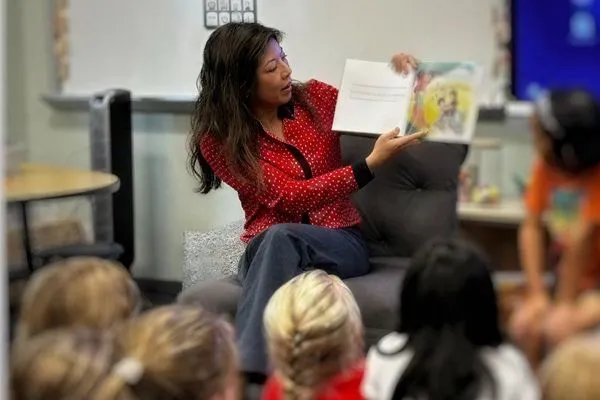
A parent might read a page about saving and ask a child what they are saving for. A teacher might use a character's mistake to start a classroom discussion. You might use a story to introduce a difficult concept in a more approachable way. The book becomes a bridge.
It takes an idea that might otherwise feel complicated and gives adults and children a common language to talk about it.
That is one of the reasons these stories were created. They aren't meant to replace the conversations adults have with children. They're designed to start them.
Why These Lessons Matter
Children are growing up in a world where they will need to navigate increasingly complex choices.
They will encounter advertising everywhere.
They will make decisions about spending and saving.
They will experience academic and social challenges.
They will fail at things.
They will compare themselves to others.
They will encounter situations where they don't know what to do.
We can't predict every challenge they will face. But we can help prepare them.
We can give them language. We can give them practice. We can normalize conversations about money. We can teach them that learning takes time. And we can help them understand that their current abilities don't have to define their future.
That's the larger mission behind Prosperous Kids' books.
Not to tell children exactly who they should become. But to give them some of the tools they need to figure it out for themselves.
The Story Behind the Stories
Every children's book has a story inside it. But sometimes, there is an even bigger story behind the book.
It's the story of wanting to make difficult conversations easier and breaking cycles of money trauma. It's the story of turning ideas about money, decision-making, resilience, and growth into characters and experiences children can understand. And perhaps most importantly, it's a story about believing that small lessons can have a big impact when children learn them early.
A child learning to save today may become an adult who understands the value of planning.
A child learning that mistakes are part of learning may become an adult who isn't afraid to try something difficult.
A child learning to pause before spending may develop habits that serve them for years.
A child learning to say “I can't do it yet” may grow up believing there is always another possibility.
That is the hope behind these books. The stories are written for children. But the vision behind them is much bigger. Because when we teach children how to think, choose, learn, and grow, we're not simply preparing them for the next chapter of childhood. We're helping them prepare for the story of their lives.