

The $25 Lesson That Could Make Your Child a Millionaire
Why Starting Small Matters More Than Waiting for the “Right Time”
When it comes to teaching kids about money, many parents believe they need to wait until they have more income, more knowledge, or the perfect plan. But the truth is, one of the most valuable financial lessons has nothing to do with the amount of money, it has everything to do with starting early.
A recent story highlighted a teenage girl who began contributing just $25 a month to her Roth IRA using money she earned from her part-time restaurant job. It wasn't a large contribution, but it was enough to build an incredibly powerful habit.
That's the lesson every family can learn from.
Time Is Your Child’s Greatest Financial Advantage
One of the biggest misconceptions about investing is that you need a lot of money to make a difference.
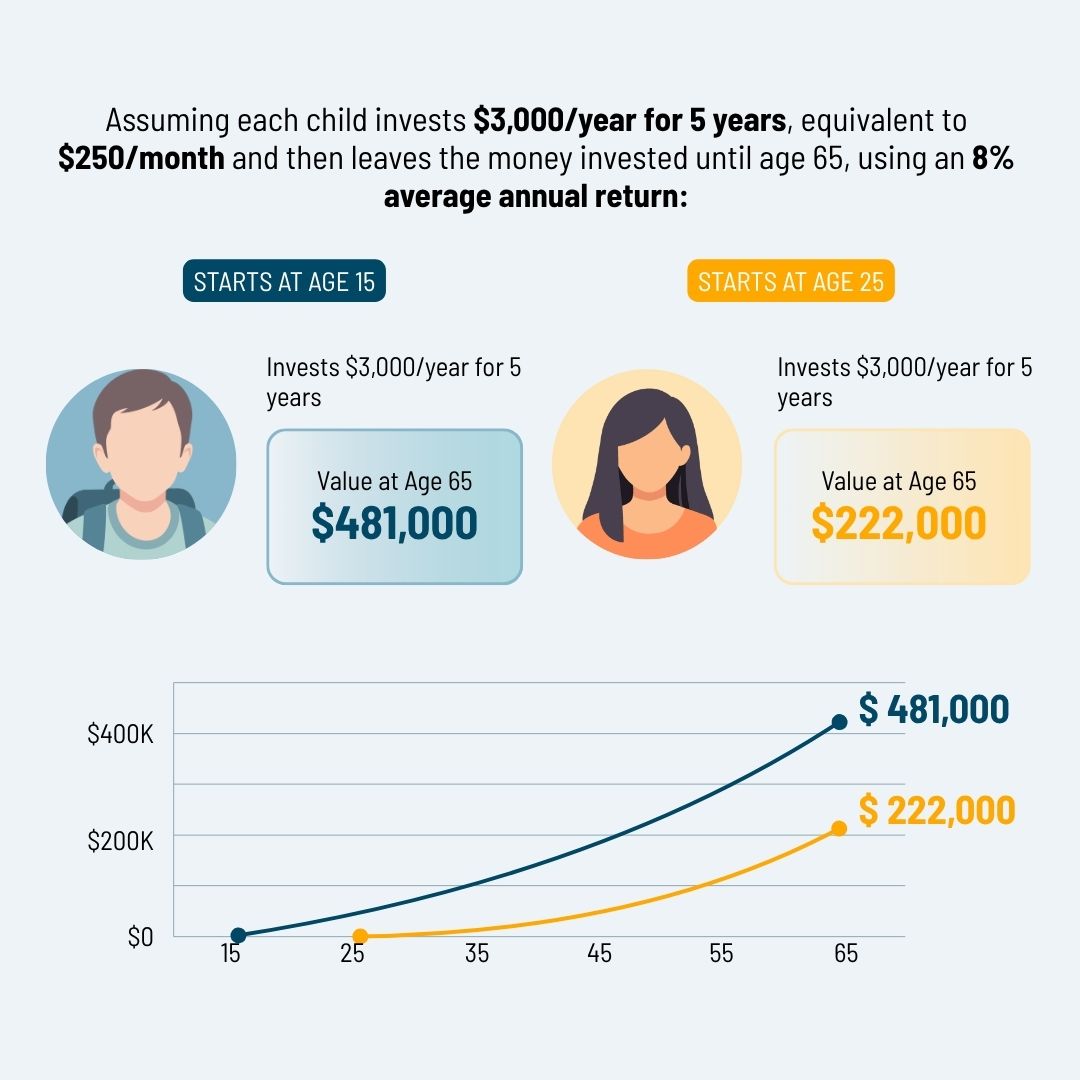
In reality, time is often far more valuable than the amount invested.
Because of compound growth, even modest contributions made during the teenage years can grow dramatically over several decades. Starting years earlier gives investments more time to earn returns and for those returns to earn returns of their own.
The earlier children begin investing, the more opportunity they have to build long-term wealth without needing enormous contributions later in life.
You Don't Need a Big Paycheck
If your child earns money through:
Babysitting,
Lawn mowing,
Pet sitting,
Tutoring,
A summer job, and
A part-time job after school...
they may already have an opportunity to begin learning about investing.
The goal isn't to maximize contributions immediately. The goal is to help them understand that every dollar they invest today is working for their future.
Even contributing a small amount each month helps children develop healthy financial habits that can last a lifetime.
Focus on the Habit, Not the Number
Many parents delay teaching financial skills because they think they need to do everything perfectly. They don't.
Instead of worrying about investing hundreds of dollars, consider starting with whatever is realistic for your family. Some parents choose to match their child's contributions, even if it's only a few dollars, to encourage consistency and reinforce the habit of saving and investing.
Watching an investment balance slowly grow gives children a real-life lesson that no textbook can match.
Small Steps Create Lifelong Confidence
Financial confidence isn't built overnight. It grows through small, consistent actions that teach children how money works over time. Opening an investment account, making regular contributions, and discussing long-term goals all help transform money from something mysterious into something manageable.
The most important investment you can make isn't necessarily the first deposit.
It's giving your child a head start.
Final Takeaway
You don't need the perfect amount of money, the perfect investment strategy, or the perfect moment to begin teaching your child about investing.
If your child has earned income, even just a little, consider helping them take that first step. Starting small today can create habits and opportunities that pay dividends for decades to come.
Sometimes the biggest financial advantage isn't having more money.
It's simply having more time.
As parents, educators, and caregivers, we have the opportunity to raise children who are confident with money, wise in their decisions, and generous with what they have. Those are lessons that will serve them and the people around them for a lifetime.