

Innovative Ways Parents Are Teaching Kids About Finance Today
Most adults wish they’d learned about money sooner. Today’s parents are making sure their kids don’t have to.
Here’s a painful truth most parents face: we were never really taught how money works. We learned by trial and error, missed credit card payments, impulse buys we regretted, savings accounts we never opened. And now we’re raising children in a world where financial decisions come faster and younger than ever before.
The good news? A growing movement of parents is breaking that cycle and they’re doing it in ways that are surprisingly creative, effective, and yes, even fun.
The Real Problem: Silence Around Money
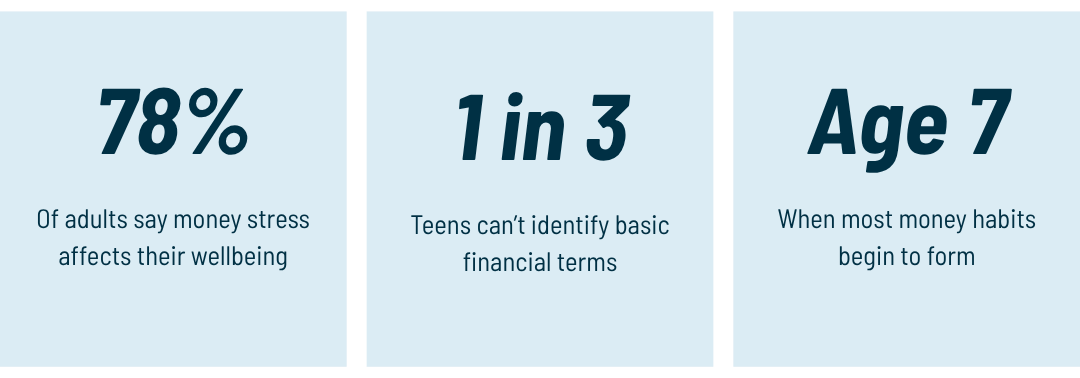
Many families treat money like a private subject, something kids will “figure out when they’re older.” But research consistently shows that financial habits form as early as age 7. By the time a child is a teenager, many of their attitudes toward spending, saving, and earning are already deeply ingrained.
The result? Young adults enter the workforce without knowing how to budget, what compound interest means, or why an emergency fund matters. The gap isn’t intelligence, it’s exposure.
What Smart Parents Are Doing Differently
Forward-thinking parents aren’t waiting for schools to fill the gap. They’re weaving financial lessons into everyday life at the grocery store, at bedtime, and at the kitchen table. Here’s how:
1. Making money stories part of bedtime
Children’s books about money do something worksheets can’t: they make abstract concepts emotionally real. When a character saves up for something they want, or learns the difference between a need and a want, kids absorb the lesson through empathy, not memorization.
a. Try this: After reading, ask one simple question, “What would you have done with that money?” It sparks reflection without pressure.
b. What to look for: Books that show money as a tool, not a reward or a source of stress, build a healthier relationship with finances from the start.
2. Grocery store lessons in real time
The grocery store is one of the richest financial classrooms available and it’s free to use. Parents are turning weekly shopping into a live exercise in comparison, budgeting, and decision-making.
a. Give them a job: Hand your child a small budget (say $5) to find the best cereal for the price. Let them compare unit costs and make the call.
b. Name the trade-offs: “If we buy the name-brand, we have less left for fruit. What do you think?” This language, like trade-off, not sacrifice, builds a healthy money mindset.
3. Games and tools that make it click
Financial education tools designed for children have come a long way. From board games that simulate running a small business to illustrated activity books that walk through saving goals, the market for engaging, age-appropriate resources has never been better.
a. Look for tools that: Use relatable scenarios (saving for a toy, earning from a lemonade stand), show progress visually, and tie emotions to decisions.
b. Avoid tools that: Focus only on rules and formulas without context. Numbers without stories rarely stick for young learners.
Age-by-Age Guide: What To Teach And When
Financial literacy is a progression, not a single lesson. Here’s a simple framework for matching concepts to developmental stages:
Ages 3-5: Money Is Real
Introduce coins and bills. Use play stores. Talk about “paying” for things.
Focus: money exists and we use it to buy things.
Ages 6-8: Earning and Saving
Start small - give opportunities to earn money. Introduce four jars (Spend, Save, Give, Invest). Focus: money comes from creating value, and saving means waiting for something better.
Ages 9-12: Needs vs. Wants
Let them manage a small budget for school supplies or outings. Introduce the concept of trade-offs. Focus: every choice has a cost.
Ages 13+: Interest and Goals
Introduce compound interest with real numbers. Talk about short and long-term goals. Focus: time is money’s most powerful partner.
The Mindset Shift That Changes Everything
The most powerful thing a parent can do isn’t teach a specific financial rule, it's to model a healthy relationship with money. Children absorb more from what they observe than what they’re told.
That means talking out loud about small decisions: “I’m choosing the store brand today so we can save for our trip.” Or: “I saw something I wanted, but I waited a week and realized I didn’t actually need it.” These micro-moments are worth more than any textbook.
Start Today, Not Someday
You don’t need to have it all figured out to start. Pick one small habit this week: read a money-themed book together or let your child help you compare prices at the store. Small, consistent moments compound over time just like interest.
The families raising financially confident kids aren’t waiting for the perfect moment. They’re making ordinary moments count.